How to Spot Genuine Eye Drops and Lash Serum Packaging
Eye products are sterile medicines. A bottle that has been faked, tampered with or badly stored can hurt your eyes in ways a skin cream never could. This guide explains what regulators have warned about, what to look for on a bottle or a lash serum package, and what to do if something looks wrong. It does not replace advice from a pharmacist, who can look at the product in your hands.
Key takeaways
- The FDA has warned against unapproved copycat eye drops that were sold online, one of which tested positive for dangerous bacteria.
- Some copycats were designed to be mistaken for a well-known brand, even carrying the brand’s name on the packaging.
- A genuine package shows complete, consistent labelling and an intact seal.
- Buy from licensed pharmacies or sellers you can identify, and be wary of sellers making false claims.
- If you notice symptoms of an eye infection, get medical care immediately.
What the FDA warned about
The FDA warned consumers not to buy or use South Moon, Rebright and FivFivGo eye drops, which it described as unapproved copycats that could be mistaken for Lumify, an over-the-counter redness reliever. Some copycats even falsely carried “Bausch + Lomb” at the top of the packaging. In testing, South Moon samples bought online were contaminated with Burkholderia cepacia complex, bacteria that can cause antibiotic-resistant infections, and neither South Moon nor Rebright contained brimonidine tartrate, the active ingredient in Lumify. The products also claimed to treat glaucoma, which needs prescription medicine or surgery. The lesson is that attractive packaging and bold claims are easy to copy.
Seven checks on the package
| Check | What to look for |
|---|---|
| 1. Name and strength | Product name, active ingredient and strength (for example bimatoprost 0.03%) printed clearly on box and bottle |
| 2. Manufacturer | A named manufacturer and an address, not only a brand |
| 3. Batch and expiry | Batch number and expiry date on both box and bottle, and they should match |
| 4. Seal | Intact tamper-evident seal, no signs of opening |
| 5. Print quality | Sharp text, no spelling mistakes, consistent colours and logos |
| 6. Leaflet | A leaflet in a language you read, with dosing and warnings |
| 7. Liquid | Clear, with no particles, cloudiness or odd colour, and a smooth applicator or dropper tip |
No single check is proof. Several small oddities together are a reason to stop and ask.
Check the seller as well
The FDA’s advice is to buy eye products from reputable retailers such as state-licensed pharmacies and to be wary of online sellers making false claims. A reliable seller shows a business name and address, a way to reach customer support, and plain information about what the product is. Be cautious about a seller who promises results from a medicine that regulators have not approved for that use, or who will not name the manufacturer. Our guide on branded versus generic bimatoprost explains what labelling to expect from a legitimate generic, and the page on Careprost eyelash serum shows how we describe a product, its pack sizes and its safety information.
Know what the right product looks like
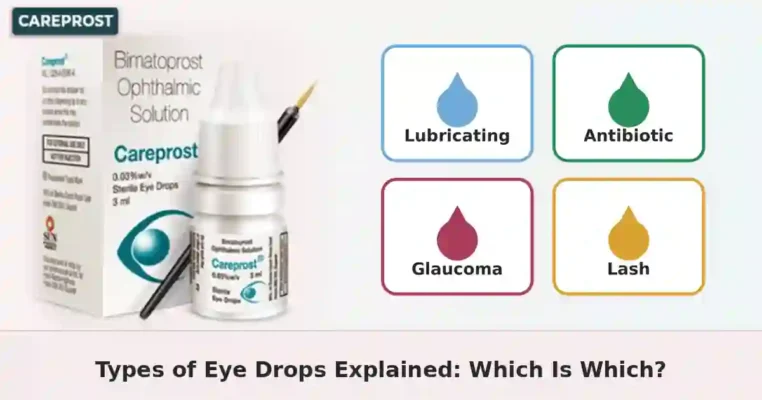
If you already use an eye product, keep the box and leaflet. Compare a new bottle against it, and look up the maker’s own photos. For lash serums, the Latisse prescribing information describes the correct use: apply to the upper lash line with a sterile applicator, one new applicator per eye, and store the bottle intact at 2 to 25 degrees Celsius. A product that tells you to put a lash serum into the eye, or that gives no directions at all, is not following that model. Our overview of types of eye drops helps you match a bottle to its purpose, and how to apply Careprost shows the technique for lashes.
Storage and age of the bottle
Even a genuine bottle goes wrong if it is kept badly or used too long. Heat, contamination and old age all matter, so follow the discard date after opening and keep the bottle closed. The guide on eye drops after opening explains the common 28-day guidance and how to store a bottle. Never top up a bottle or refill it from another.
What to do with a bottle you doubt
- Do not use it, even once.
- Keep the bottle, box and receipt together.
- Ask a pharmacist to look at it.
- Contact the seller and ask for the manufacturer and batch details.
- Report a suspected fake or a reaction to your national regulator, such as the FDA MedWatch in the United States.
Related products on our site
These are prescription-type medicines in many countries. Check your local rules and speak with a doctor or pharmacist before using any of them.
Frequently asked questions
How can I tell if an eye drop is fake?
Look for missing or inconsistent batch numbers, poor printing, a broken seal and a seller who cannot name the manufacturer. Ask a pharmacist if you are unsure, because no single sign proves it.
Are cheap eye products always fake?
No. Generics can legally cost less. A price far below every other seller, combined with missing labelling, is a warning sign.
Is the box more important than the bottle?
Both matter. Batch and expiry details should match on the box and on the bottle itself.
Where should I buy eye products?
The FDA advises state-licensed pharmacies and other reputable retailers, and caution with online sellers that make false claims.
What if my eyes feel strange after using a new bottle?
Stop using it and seek care promptly, especially with pain, discharge or vision changes.
Final thoughts
A safe eye product has a clear label, a sealed package and a seller you can identify. When something does not add up, put the bottle down and ask a pharmacist before it goes near your eyes.
This article is general information and not medical advice. Always follow your doctor’s instructions and the leaflet for your own product.
Sources