Who Should Not Use Bimatoprost Eyelash Serum? Precautions Before You Start
Bimatoprost 0.03% is a prostaglandin analogue that is used on the eyelid margin to help lashes grow longer, thicker and darker. It is widely discussed online as if it were a simple cosmetic, but it is a medicine, and the prescribing information lists clear warnings. This guide explains who should be especially careful before starting, what the label says, and when it is better to see an eye doctor first.
Quick answer
People who should not use bimatoprost are those with a known allergy to bimatoprost or any ingredient in the product. People who should get medical advice first include anyone with glaucoma or who already uses a prostaglandin eye drop, anyone with active eye inflammation, people who have had certain eye operations, and those who are pregnant or breastfeeding. Stop and seek advice if you develop eye pain, marked redness, discharge or any change in vision.
Key takeaways
- The Latisse label lists hypersensitivity to bimatoprost or any ingredient as a contraindication.
- If you use a pressure-lowering prostaglandin eye drop, your eye pressure should be monitored, so tell your eye doctor before starting.
- Active eye inflammation and certain eye conditions call for caution.
- In pregnancy, the label says to use it only if the potential benefit justifies the potential risk.
- Iris colour changes may be permanent, so understand the risk before you begin.
- This page is general information, not a substitute for a personal assessment.
Why this product needs more care than a normal cosmetic
Many eyelash products on the market are cosmetics. Bimatoprost 0.03% is different: it is a prescription ophthalmic medicine in many countries, and the same active ingredient at a different strength is used in glaucoma eye drops. That is why eye doctors tend to recommend a quick check before use, especially for people with existing eye conditions. If you are curious about how the lash version and the glaucoma version differ, our comparison of Lumigan, Latisse and Careprost sets out the differences, and our article on bimatoprost vs latanoprost explains how this drug class is used in eye care.
1. People with an allergy to bimatoprost or the ingredients
The prescribing information states that the product is contraindicated in patients with hypersensitivity to bimatoprost or to any of its ingredients. Signs of an allergic reaction around the eyes can include itching, swelling, redness of the lids, or a rash. If you have ever reacted to a prostaglandin eye drop or to a preservative used in eye products, tell your doctor or pharmacist before using it.
2. People with glaucoma or who use prostaglandin eye drops
Bimatoprost can lower pressure inside the eye. In clinical studies, the reduction in eye pressure in lash users was not considered a clinical concern, but the label advises that patients who already use pressure-lowering prostaglandin analogues should be monitored for changes in their eye pressure. The American Academy of Ophthalmology position statement also advises telling your eye doctor if you use a prostaglandin analogue for glaucoma. Our page on Lumigan and glaucoma eye drops gives background on the medical use, but it should not replace advice from your own ophthalmologist.
3. People with active eye inflammation or certain eye conditions
The label says to use the product with caution in patients with active intraocular inflammation, such as iritis or uveitis, and in aphakic patients, meaning people whose natural lens has been removed. Inflammation can be made harder to monitor if a product is also causing redness or irritation. If you have red, painful or light-sensitive eyes, get them checked before adding a new product.
4. People with eyelid infections or irritated lids
Conditions such as blepharitis, styes or an eye infection make it hard to tell whether redness and itching come from the condition or from a product. They also raise the risk of contamination when applying anything near the lash line. Treat and settle the problem first, and read our guide on whether eyelashes can grow back after blepharitis for background.
5. Pregnant or breastfeeding women
The label says the solution should be used during pregnancy only if the potential benefit justifies the potential risk to the fetus. For breastfeeding, it says the developmental and health benefits of breastfeeding should be considered along with the mother’s clinical need. This is an area where the careful choice for most people is to ask their doctor rather than rely on general advice.
6. Younger users
Older position statements from eye-care organisations noted that the product was not approved for people under 18. The current prescribing information describes a study in adolescents aged 15 to 17, so age guidance has changed over time and varies by country. If you are under 18, or buying for someone who is, ask a doctor and check the rules where you live.
7. People who cannot accept a permanent change in iris colour
The label advises users about the potential for increased brown iris pigmentation, which is likely to be permanent. Eyelid skin darkening has been reported to be reversible in most people after stopping. Because an iris colour change is not easily undone, anyone who would be unhappy with it should think carefully, and should speak to a doctor if they have light-coloured or mixed-colour eyes. We explain this in more detail in our guide to bimatoprost side effects.
8. People who cannot follow the application instructions
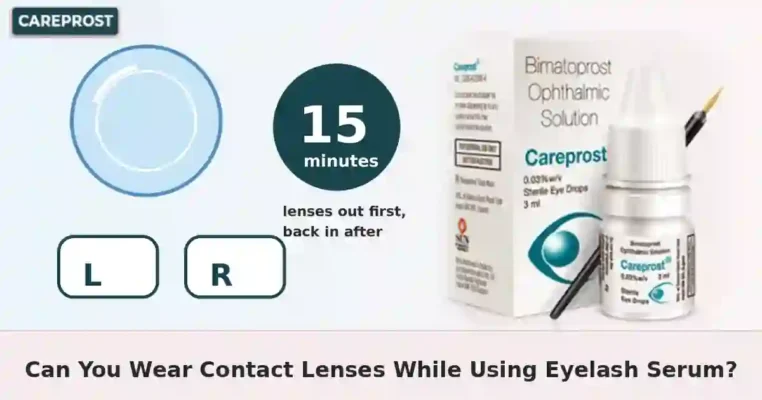
Correct use matters for safety as well as results. The label says to apply the solution only to the skin of the upper eyelid margin, blot excess solution, remove makeup and contact lenses first, and use a new sterile applicator for each eye. If you cannot do this consistently, for example because of hand tremor or poor vision, ask your doctor whether it is suitable. Our step-by-step application guide and article on common mistakes to avoid are useful references.
Warning signs: stop using it and get advice
- Eye pain, a feeling that something is in the eye, or a gritty feeling that does not settle.
- Marked redness, swelling or discharge.
- Blurred or reduced vision, or sensitivity to light.
- A rash, hives or swelling of the face or eyelids.
- A noticeable change in iris colour or marked darkening of the eyelid skin.
Questions to ask before you start
- Do I have any eye condition that makes this unsuitable?
- Do I use any eye drops, especially for glaucoma?
- Are there risks for me if I am pregnant, planning pregnancy or breastfeeding?
- What should I do if I get irritation, and who should I contact?
- How long should I try it before reviewing, and what happens when I stop?
It is also worth knowing that effects are not permanent. The prescribing information says lash growth gradually returns to its original level after treatment is stopped. If you are worried about stopping, our article on what to expect when you stop bimatoprost explains what people commonly notice.
Where to read product details
You can read about the bimatoprost lash products we list: Generic Latisse (Bimatoprost), Lashona (Generic Latisse) and Careprost With Brush. The same active ingredient is also listed for glaucoma use under Lumigan 0.01 and Lumigan 0.03, and for lashes under Careprost Plus. These products may need a prescription where you live, so check local rules and talk to a doctor.
Frequently asked questions
Is bimatoprost eyelash serum safe for everyone?
No. It is contraindicated in people with hypersensitivity to bimatoprost or its ingredients, and several groups should get medical advice first.
Can I use it if I have glaucoma?
Only with advice from your eye doctor. If you already use a pressure-lowering prostaglandin drop, your pressure should be monitored.
Can I use it while pregnant or breastfeeding?
The label says to use it in pregnancy only if the potential benefit justifies the potential risk, and to weigh the benefits of breastfeeding. Ask your doctor.
Does it permanently change eye colour?
Increased brown iris pigmentation is possible and is likely to be permanent, according to the label. Eyelid skin darkening is reported to be reversible in most patients after stopping.
What if I get irritation or redness?
Stop using it and seek advice, especially if you have pain, discharge or any change in vision.
This article is general information and not medical advice. Always read the leaflet for your own product and ask your doctor about your own situation.
Sources