Types of Eye Drops Explained: Which Is Which?
A pharmacy shelf can hold a dozen bottles that all say “eye drops”. They are not interchangeable. Some only add moisture, some treat allergy, some lower eye pressure, and a few can make a problem worse if they are used the wrong way. This guide sorts the main types, explains what each is for, and lists the safety habits that apply to every bottle.
Key takeaways
- Artificial tears treat dry eye. Antihistamine drops treat allergy itching and redness.
- Anti-redness drops give short-term whitening and should be used only occasionally.
- Glaucoma drops, such as bimatoprost, are prescription-type medicines used to lower eye pressure.
- Preservatives keep multi-dose bottles safe but can irritate some people.
- Pain, discharge or reduced vision are reasons to see a professional, not to try another drop.
The main types at a glance
| Type | Used for | Good to know |
|---|---|---|
| Artificial tears | Dry, gritty or tired eyes | Preservative-free vials suit frequent use |
| Night gels and ointments | Overnight dryness | Blur vision briefly, so use at bedtime |
| Antihistamine drops | Itching and redness from allergy | Confirm allergy is the cause first |
| Anti-redness drops | Short-term whitening of the eye | Daily use can make redness worse |
| Glaucoma drops | Lowering eye pressure | Prescribed, used regularly, checked by a doctor |
1. Artificial tears
Artificial tears are lubricants for dry eye, which happens when the eyes do not make enough tears or the tears evaporate too quickly. AARP’s guide to eye drops notes that preservative-free single-use vials are generally better for people with more severe dry eye who need drops more than four times a day, because heavy preservative exposure can irritate the eye. Thicker gels and ointments, which are meant for night, can blur vision for a short time, so they are best applied just before sleep.
2. Antihistamine drops
These drops relieve itching and redness caused by eye allergies. AARP advises seeing an eye doctor first to confirm that allergy is actually the cause, and says these drops are generally preferred over antihistamine tablets, which can dry the eyes out. If you use antihistamine drops together with preservative-free artificial tears, apply one, wait about five minutes, and then apply the other so they do not dilute each other.
3. Anti-redness drops
Anti-redness drops narrow the surface blood vessels so the eye looks whiter for a while. According to the same guide, they should be used only occasionally, because daily use can make redness worse over time. Redness that keeps returning points to an underlying cause, such as dryness, allergy, a contact lens problem or infection. If your redness appeared after you began a new product, our article on bimatoprost side effects explains the common reactions and when to stop.
4. Prescription drops
Prescription eye drops include antibiotics, steroid drops, and glaucoma medicines. Bimatoprost is a prostaglandin analogue that is used in glaucoma treatment as Lumigan, where it lowers raised pressure inside the eye. Our overview of Lumigan glaucoma eye drops explains that medical use, and the comparison of bimatoprost versus latanoprost looks at two common drugs in the same class. These drops are not a general remedy for red or tired eyes, and they should be used under medical supervision.
Where lash serums fit
An eyelash serum is not an eye drop in the usual sense. The Latisse label directs that one drop is placed on a sterile applicator and drawn along the upper lash line, not instilled into the eye. The active ingredient, bimatoprost 0.03%, is the same molecule found in some glaucoma drops, which is one reason these products are often confused. The 0.01% and 0.03% strengths are explained in their own guide.
- Wash your hands before you start.
- Tilt your head back, pull the lower lid down and let the drop fall from a short distance.
- Do not let the tip touch your eye, lashes, fingers or any surface.
- Close the cap right after use and do not share bottles.
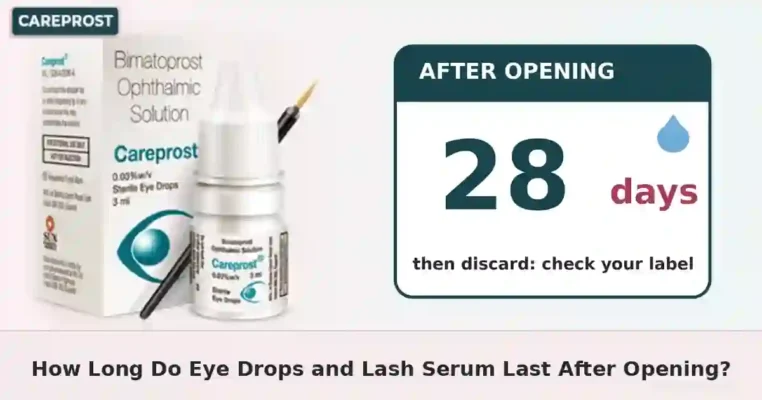
- Throw away expired drops and follow the discard date after opening.
The discard rules for opened bottles are covered in eye drops after opening.
Contact lenses and drops
AARP says thin rewetting drops and most dry-eye drops are generally fine with lenses, while thick gels and ointments can stick to them and are better used at bedtime after the lenses are out. Medicines that contain benzalkonium chloride, including Latisse, can discolour soft lenses, so the label says to remove lenses first and wait 15 minutes. If you use a lash product, read lenses and eyelash serum.
Choosing sensibly
- Name the symptom: dry, itchy, red, painful or blurred.
- Match it to a type, not to a brand name.
- Check the label for preservatives if you have sensitive eyes or wear lenses.
- Use the lowest frequency that controls the symptom.
- See an eye doctor if it does not improve within a few days or if it keeps coming back.
Related products on our site
These are prescription-type medicines in many countries. Check your local rules and speak with a doctor or pharmacist before using any of them.
Frequently asked questions
Can I use artificial tears with other eye drops?
Often yes, but space them out. AARP suggests waiting about five minutes between a preservative-free tear and an antihistamine drop so the second does not wash out the first.
Are preservative-free drops safer?
They are gentler for frequent use. AARP notes they carry a somewhat higher infection risk because preservatives inhibit microbial growth, but they are still considered safe to use.
Why do my eyes look redder after anti-redness drops?
Regular use of vasoconstrictor drops can cause rebound redness. If the redness keeps returning, ask an eye doctor to look for the cause.
Is a lash serum the same as a glaucoma drop?
No. They can share the same active ingredient, but a lash serum is applied along the lash line, while a glaucoma drop is instilled into the eye to lower pressure.
Can I use leftover drops from last year?
Not if the bottle is expired or past its discard date after opening. Contaminated drops can cause eye infections.
Final thoughts
Good eye care starts with matching the drop to the problem. Use the simplest product that fits, keep the bottle clean, and let a doctor look at symptoms that do not settle.
This article is general information and not medical advice. Always follow your doctor’s instructions and the leaflet for your own product.
Sources